

On almost any given day, Brookside basements can absorb enough moisture to cause a trickle!
Rainwater + Brookside Basements = Seepage
Seepage is a nearly unavoidable reality for many Brookside homeowners. No matter how dry your basement seems, or the previous homeowner claims, Brookside basements can develop a water problem at any time. Learning how to remedy a damp basement can save homeowners headaches, frustration, and dollars. Following are a few of Ellen’s tips to curb wet basement blight!
1. First – Get Valuables Off the Floor
When using basement storage containers that are even remotely absorbent, take cardboard for example, rule #1 is to keep it off the floor. Concrete is porous and easily absorbs even the slightest amount of moisture and transfers it to other absorbent objects on the floor. The majority of basements in Brookside have concrete floors of varying thickness. Back when these homes were built, most had basements with dirt floors. Concrete floors were poured later.
 Use floor pallets or shelving to get items off the floor – or consider replacing cardboard or other similar storage containers with plastic bins. Washers, dryers, and other appliances should also be placed on pallets. To direct water away from certain areas of your basement or toward floor drains, Ellen recommends using Quick Dam Expanding Barriers. These are similar to sandbags but without the hassle.
2. Invest in a Dehumidifier
If a basement is frequently damp, it is essential to keep moisture levels down. All-stone basements will always have some moisture in them. Continuously running a dehumidifier will help avoid mold and mildew growth, improve air quality, and help protect your belongings. Ellen recommends investing in a quality dehumidifier – the heavier the better! Make sure dehumidifier drainage tubes run directly to a floor drain and remember that these need regular maintenance as well, such as changing out filters, to keep them in good working order. Don’t forget to clean drains and replace your drainage tubes often.
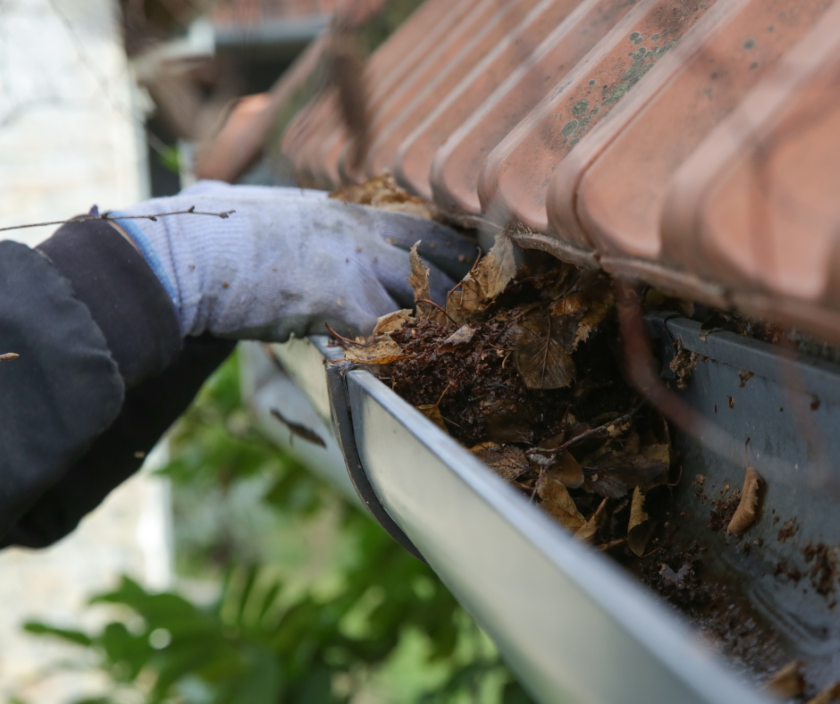
Gutter cleaning should be done 2-3 times a year depending on the amount of debris they collect.
3. Address Outdoor Drainage Issues
Oftentimes a wet basement can be remedied by addressing exterior drainage and lawn slope problems. Initially, you can identify most problem areas by walking around the perimeter of your home while it is raining.
Water trapped next to your foundation is often caused by two easy-to-fix issues – short or inadequate downspouts and clogged gutters. Downspouts should be extended to direct rainwater away from the foundation and have proper splash blocks in place. Keeping gutters clear and free of debris is also critical in keeping rainwater contained and directed to the proper outlets. These are the easiest steps you can take to reduce basement leaks!
If these gutter fixes do not slow the amount of water leaking into your basement, consider talking to a professional landscaper. Regrading a lawn’s elevation, French drains, dry creek beds, and retaining walls are some of the many solutions an experienced landscape company can offer. Contact Ellen for recommendations – as always, Ellen’s got a guy!
4. Conduct Regular Basement Inspections
If you suspect any mold or mildew in your basement, hire a professional to perform an inspection! Additionally, it is important to have smoke and carbon monoxide detectors installed in your basement. Make sure to check the batteries regularly.
 5. Paint Walls with Drylok
Drylok is a waterproofing product for masonry surfaces specifically designed to prevent water seepage and moisture infiltration. Apply to seal basement walls from damaging moisture – while also lending your basement a clean, bright, and fresh aesthetic.
Note: Need help finding someone to apply Drylok to your basement? Call Ellen first. She’s got a guy!
6. Assess Basement Bathrooms
Basement bathrooms, especially those that are rarely used, can lead to leaks, mold, or mildew. If the basement bathroom is used regularly, consider resetting the toilet to help prevent any issues.