One of the most common (and expensive!) problems many homeowners face is water damage and wood rot. These issues usually start small but escalate quickly when not addressed in a timely manner. Left unattended, water can wreak havoc as it seeps into wood framing and flooring, breaking down the wood’s fibers and creating the perfect environment for fungal growth. Even a small leak or poorly sealed window can leave a homeowner with a list of costly repairs.
What Is Wood Rot?
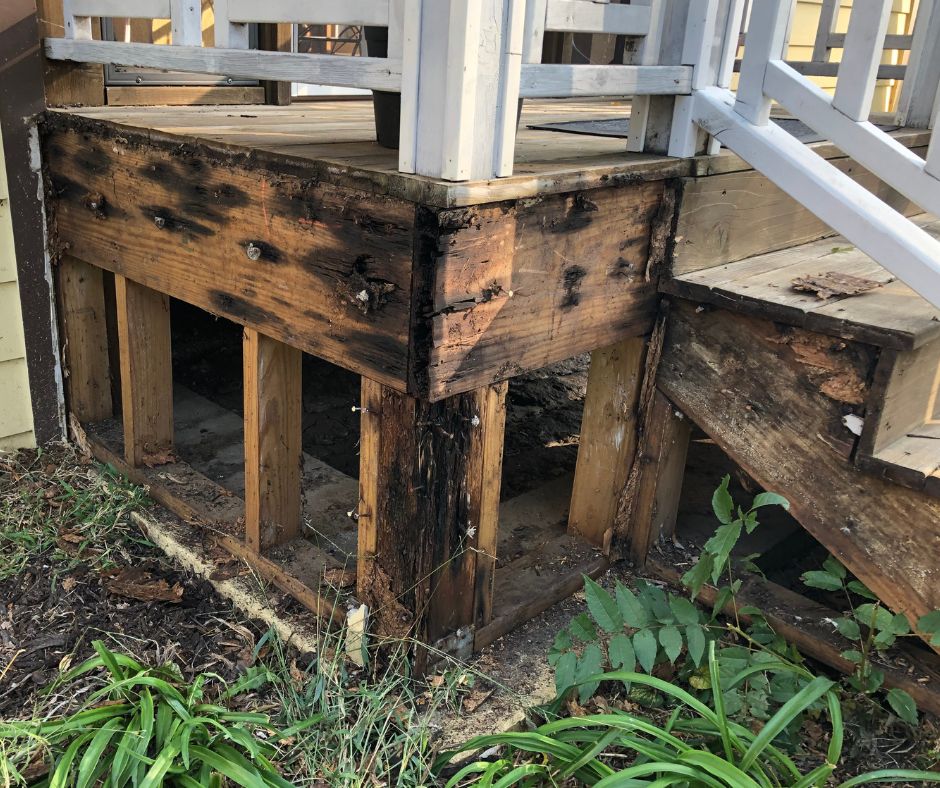
Severe wood rot can make wood look as if it has been burned.
Fungus usually tends to grow in wood that’s been in contact with moisture for an extended period of time. Once fungus sets in, it begins to break down the wood, causing it to soften, crumble, and eventually fall completely apart. This condition is known as wood rot.
Wood rot comes in two main forms: dry and wet. Dry rot, despite its name, still begins with moisture. Even if the original source of the moisture is eliminated, dry rot can remain active and continue to spread. It moves quickly and can travel through drywall, brick, and plaster to find more wood. Wood with dry rot becomes dry and brittle, turning into a crumbly, almost powdery substance. Because it can survive in low-moisture environments and spread so rapidly, dry rot often causes significant structural damage before it is even discovered.
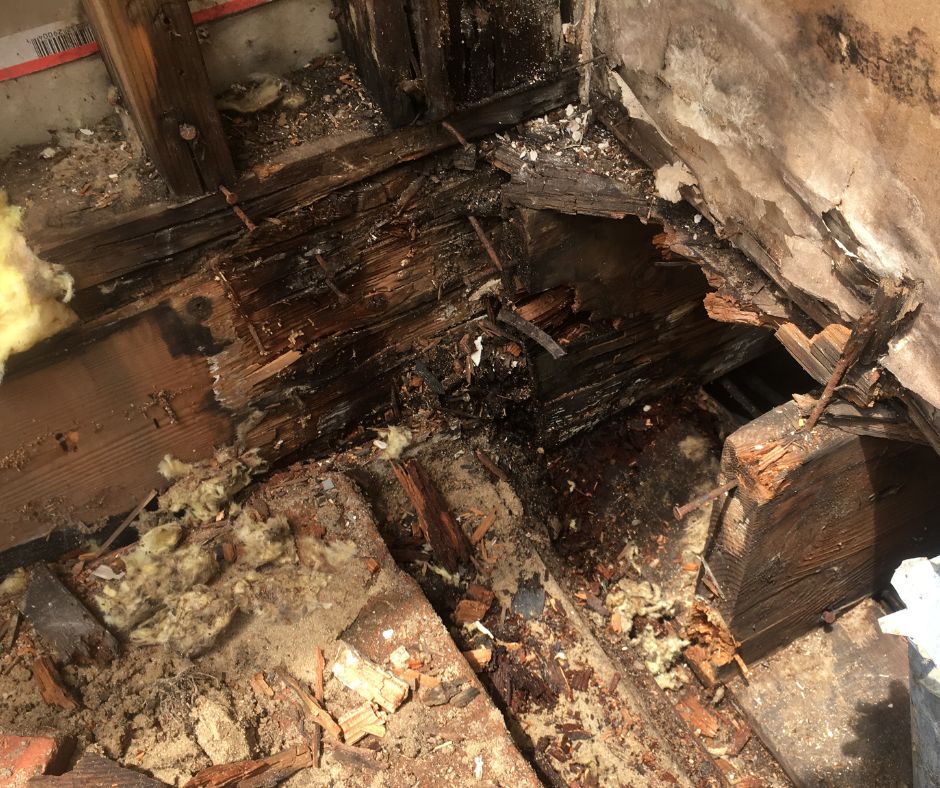
As the fungus spreads, the wood will eventually lose all structural integrity and crumble into dust.
Wet rot is more common. While less aggressive than dry rot, the damage it causes is just as serious. Wet rot appears where wood is consistently damp, like around plumbing leaks or poorly sealed windows. Wet rot needs high levels of moisture to spread, so it can easily be stopped by eliminating the source of that moisture. Wet rot causes wood to become soft and spongy and is identified by dark staining or discoloration.
Water Damage Leads to Wood Rot
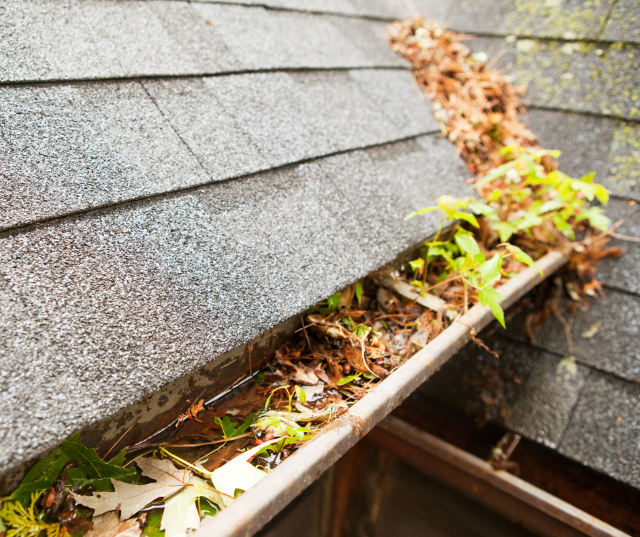
Gutters clogged for extended periods of time can cause extensive water damage and wood rot in a home’s fascia and soffit areas – and even worse.
Water damage to a home can have a number of causes, including leaks, drainage issues, or poor ventilation. When these problems are not corrected swiftly, moisture can settle in, and wood rot can begin to form. More cosmetic wood rot issues (in soffit areas, for example) can be expensive to fix on their own. But the costs of fixing structural damage caused by wood rot – and often remediating the related mold and mildew growth – can be startling. Once wood rot begins, the damaged wood must be fully removed and replaced with a synthetic wood product, such as vinyl.
Spot The Warning Signs
Recognizing the signs of wood rot around your home is crucial for catching it early. Twice a year, take a walk around the exterior and interior of the home and check for any signs of possible water damage.
Wood Rot Inspection Checklist:
Inside
- Mold or musty smell in basement areas.
- Ensure vapor barriers are in place around any sump pumps.
- Inspect sill plates and floor joists.
Attic
- Staining, dark streaks, or sagging wood decking or rafters.
- Leaks around the chimney, vents, or flashing.
- Condensation buildup.
Bathrooms & Kitchens
- Leaks or soft cabinet bases.
- Water intrusion around tubs, showers, and backsplashes.
- Leaks behind appliances like dishwashers and refrigerators with icemakers.
- Buckling or discoloration of flooring.
Windows & Doors
- Soft or spongy areas on wooden frames or sills.
- Bubbling, flaky, or separating paint.
- Condensation buildup or stains on window sills.
Ceilings, Floors & Walls
- Stains, sagging drywall, or peeling paint.
- Creaking floors or sagging ceilings.
- Use a moisture meter if you suspect a leak behind a wall.
- Swelling or separation around baseboards.
- Soft spots or flexing when walking across the floor.
- In older homes, lift floor vents to check for subfloor damage.
Outside
Roof & Gutter System
- Missing or damaged shingles.
- Clogged or overflowing gutters.
- Moisture intrusion between rooflines and exterior walls.
- Trapped moisture under eaves or underhangs.
Fascia, Soffits & Trim
- Soft spots, peeling paint, or discoloration of fascia boards or soffits.
- Peeling paint, gaps, or softness around window sills, door frames, and garage doors.
- Soft spots or discoloration near hose bibs or spigots.
Siding & Exterior Walls
- Swelling, warping, or cracking siding.
- Missing or cracked sealant or caulk.
- Mold or mildew buildup.
- Damage from ants or termites.
- Bubbling, blistering, or cracking in painted wood surfaces.
- Garden beds or mulch too close to siding or wood.
Decks, Railing & Steps
- Beam or joint damage.
- Softness or instability in posts, railings, fences, or steps.
- Check for moisture collecting under columns or posts.
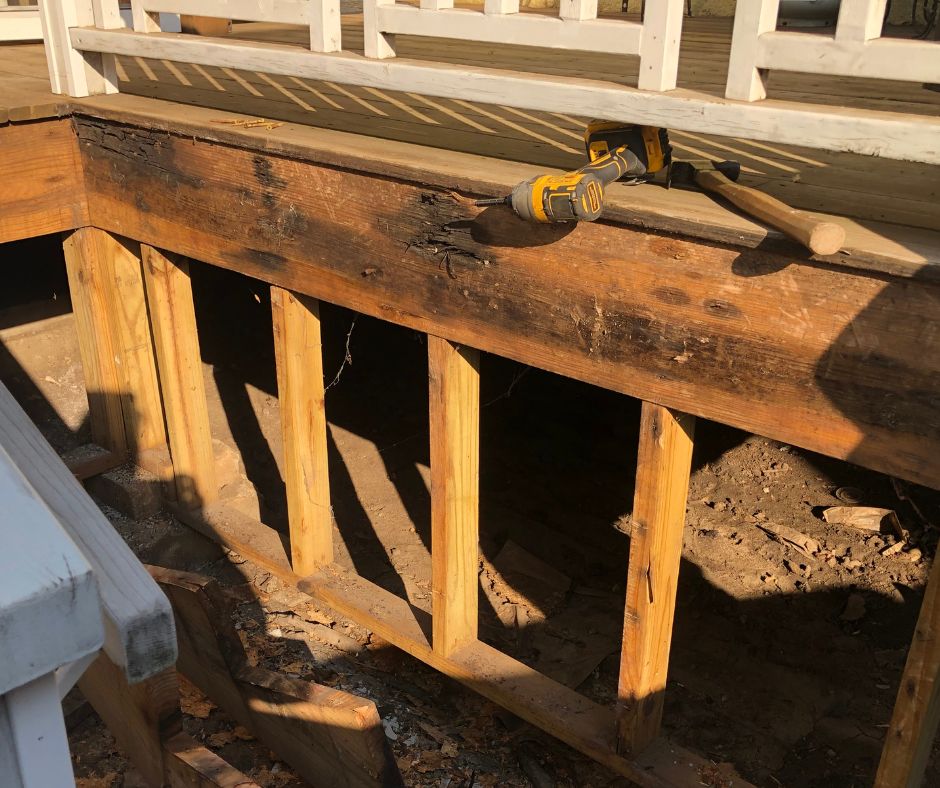
Work with experienced contractors to resolve any water damage and wood rot issues to prevent future damage!
If you suspect wood rot has begun to spread in one or more areas of your home, don’t wait to call an expert for help! If you need a trusted recommendation for a wood rot specialist, call Ellen first! Ellen works with an extensive network of home service professionals ranging from plumbers to structural contractors, and she’s glad to pass along her contacts!