What is a HELOC?
A Home Equity Line of Credit, or HELOC, allows homeowners to use their equity in their home as collateral to borrow money.
Homeowners curious about applying for a HELOC should talk with a mortgage lender or a financial institution that works with home loans. They will review the homeowner’s credit, income, and debt. If that process indicates eligibility, an appraisal or automated valuation will be ordered to determine the home’s current value. Those factors will be used to set a credit limit and determine how long the draw period – the timeframe during which the homeowner can draw from a HELOC – will be, typically between 5 and 10 years.

A HELOC can provide homeowners with flexible access to funds that can be drawn as needed and repaid over time.
HELOCs are a popular option for borrowing against a home’s value. They offer more flexibility than traditional loans and often have lower interest rates. The main risk of a HELOC: borrowing against a home means, in case of default, the lender can begin foreclosure proceedings.
Are HELOCs and home equity loans the same thing?
The primary difference between a home equity loan and a HELOC is that the HELOC works like a credit card. A homeowner can borrow as much as they need (up to the limit set by the lender) when they need it, while a home equity loan works like a traditional loan that provides a lump sum upfront.
HELOCs and home equity loans are similar in that they both let you borrow against a home’s equity, but they differ in the ways funds are accessed and repaid. A HELOC includes a stated period of time during which funds can be pulled, whereas a home equity loan provides the funds when the loan is closed, and the lender officially issues the funds.
Home equity loans require that repayment begin immediately in the form of fixed monthly payments. They also typically have a fixed interest rate, so payments generally stay consistent over time. With a HELOC, the homeowner pays interest during the draw period, though some plans may also allow payments toward principal. When that ends, the repayment phase begins, and borrowers repay both principal and interest. HELOC interest rates are variable, rather than fixed, meaning payments may increase or decrease over time as interest rates change. As a result, borrowers may ultimately pay more or less in total interest compared with a fixed-rate home equity loan.
What is a variable interest rate?
A variable interest rate means that the rate can change throughout the life of the HELOC. Changes to the interest rate are influenced by changes to the Federal Funds rate, inflation, economic conditions, and banking market conditions.
What are the most common reasons homeowners use HELOCs?
Homeowners often use HELOC funds for home renovations, debt consolidation, emergency funds, and to cover the costs of education.
Home Renovations
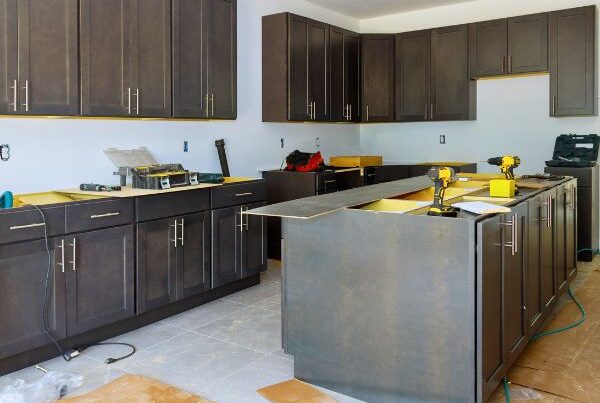
Home renovations are the most common reason homeowners apply for HELOCs. Homeowners use the funds to invest in upgrades that, hopefully, increase the property’s resale value. Renovating and updating kitchens, bathrooms, or basements, or larger-scale projects like a new roof or an addition, are projects that typically happen in phases. Accessing the funds provided by a HELOC over five years or more allows homeowners to draw only what they need when they need it, rather than borrowing a lump sum upfront and paying interest on money that has not yet been used.

Homeowners often apply for a HELOC to renovate a home before listing it for sale.
Debt Consolidation
HELOCs can be a smart financial tool for consolidating debt. A single debt with a high interest rate can be repaid with the funds provided by a lower-rate HELOC. Or multiple debts can be paid at all at once, eliminating several monthly payments for a single lower monthly payment, again at a lower interest rate.
Emergency Funds
Unexpected medical expenses or emergency home repairs can leave homeowners in need of cash fast. A HELOC can be used as a backup fund that’s there when it’s needed, and interest is paid only on the funds that are used.
Education Costs
Some families use a HELOC for tuition for private school, college, or graduate degree programs, as HELOCs sometimes offer better interest rates and more flexible borrowing terms than traditional student loans.